
TABLE OF CONTENTS
Creating a Report
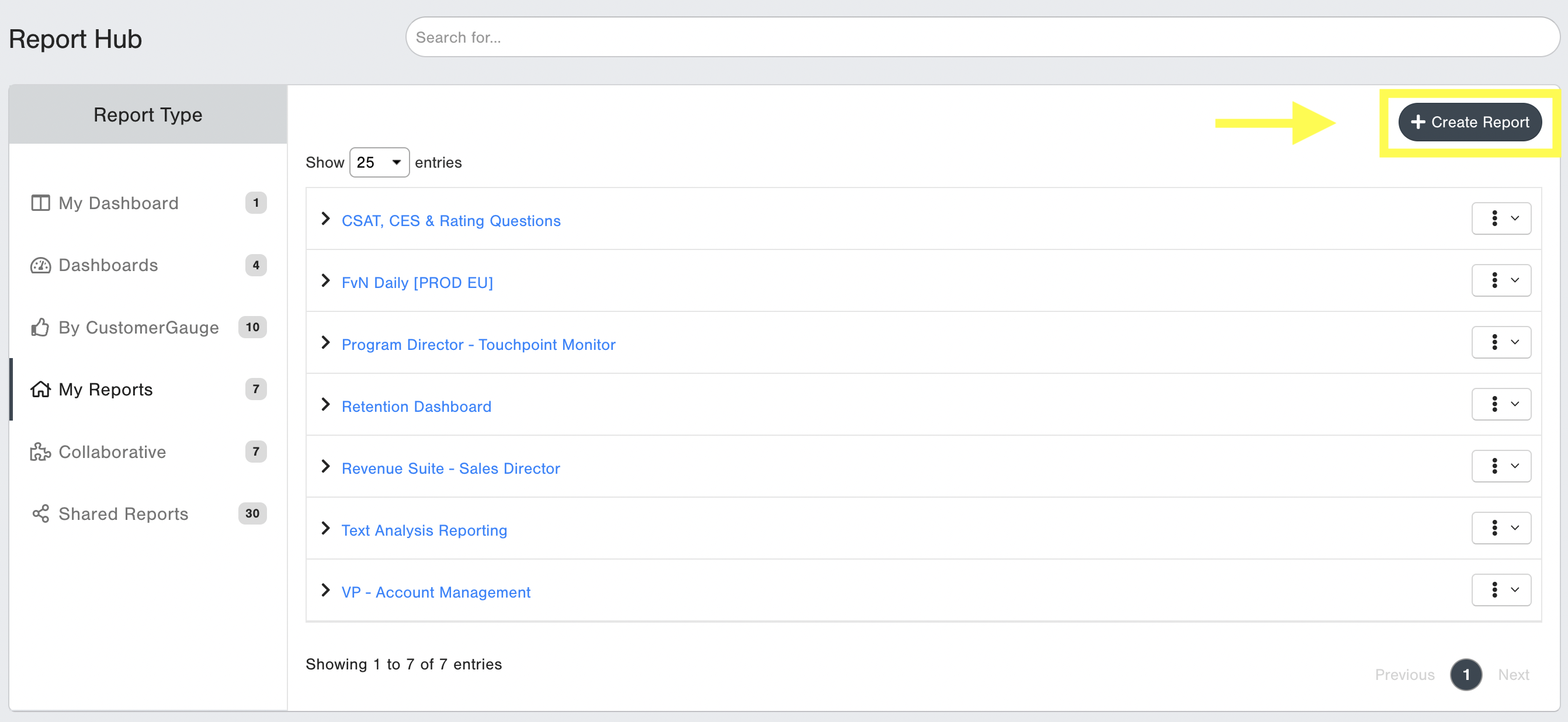
To create a report you can go to Report Hub > Create Report
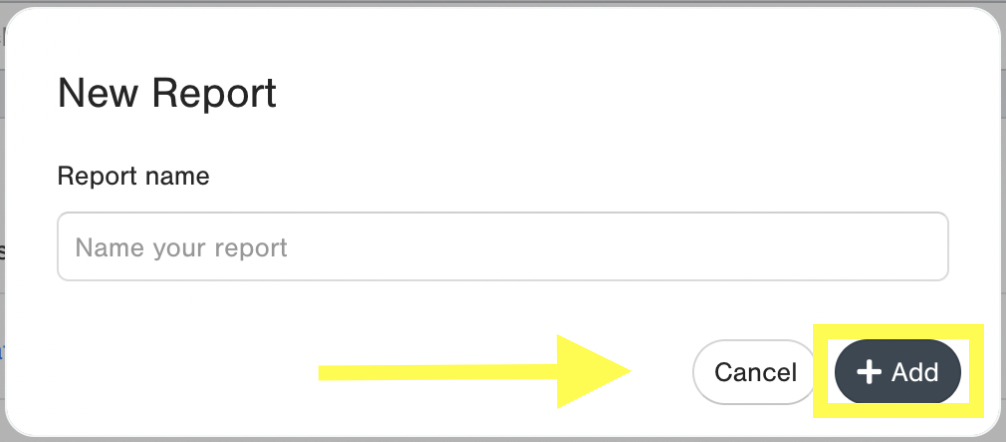
After giving a name to your report click Add.
Editing a Report
This section gives you an overview of all the settings available in the Designer Tab of a Report in edit mode.

- +New Widget: In the Report Hub you can create your own report by Adding Widgets. Widgets are configurable “cards” that you can drag and drop around the report.
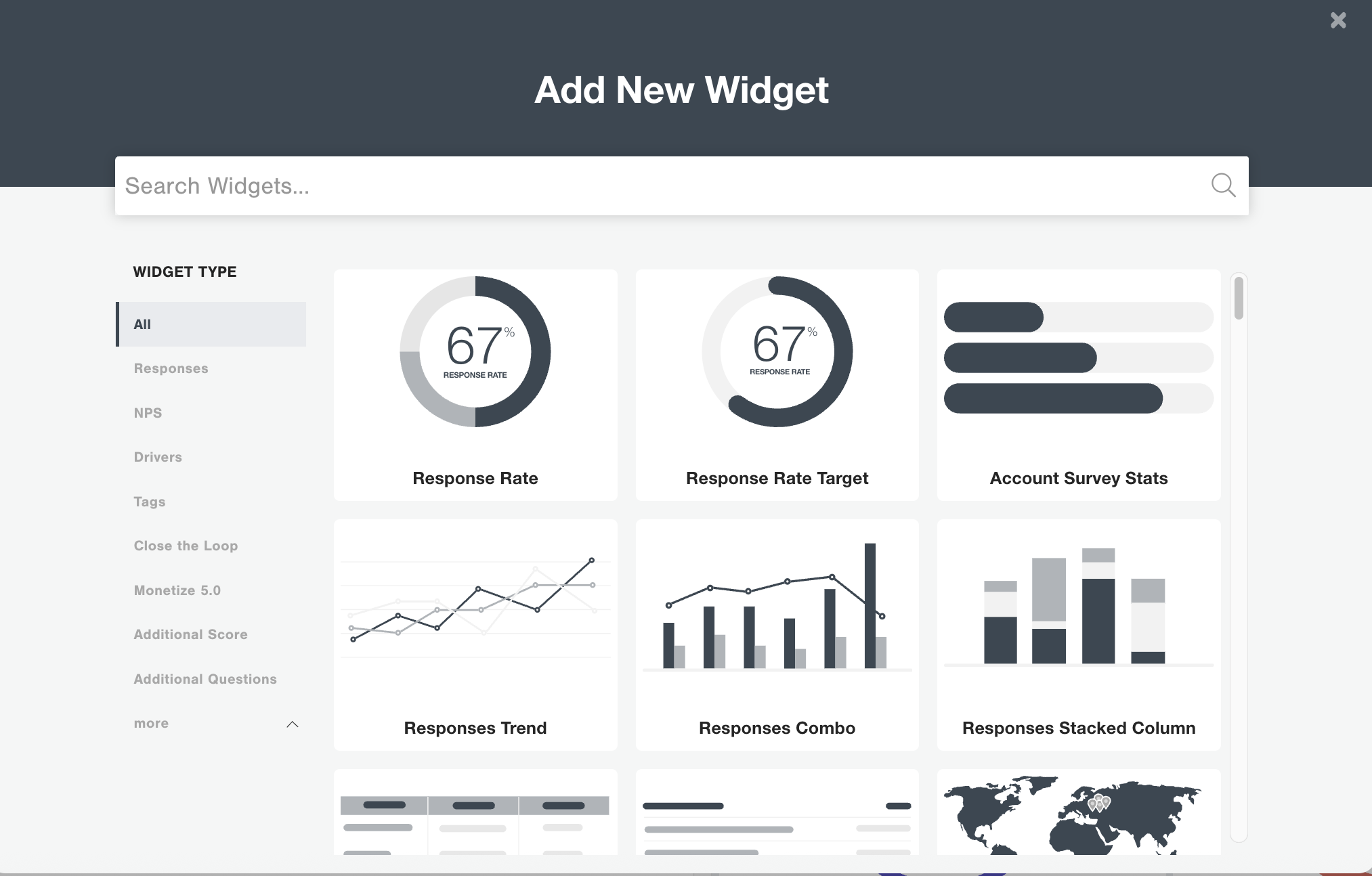
- Widget Type: The first step when adding a Widget to your report, is to choose which kind of data you want to report on.
- Visualization: The second step is to decide how you want to represent the data. Options range from line charts, to tables, to gauges!
- Widget settings: When you’ve chosen both a data source and a visualization, you can configure your widget, before adding it! Depending on the choices in the previous two steps, different options may be available.
- Save: Click the save button to save your edits or setting
- View: Click the view button to view the report. We always recommend for you to check your report in view mode!
Editing & Deleting Widgets:
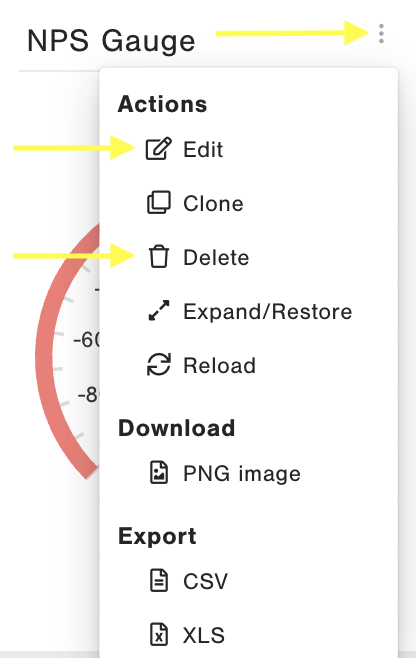
Edit: You can simply edit the widgets to make any changes you wish. However, you can’t change the data source or visualization, as the settings can be vastly different between them!
Delete: If you wish to use a different data source or visualization, or if you simply don’t want a widget anymore, you can delete it. Note that you need to save your report to apply the deletion.
Widget limit per report
Reports can contain up to 15 standard widgets. Once this limit is reached, the + New Widget option will be disabled and additional widgets cannot be added or cloned into the report.
This limit helps reports load reliably and keeps them easier to review, share, and maintain. Reports with too many widgets can become slower to load and harder to use, especially when they include multiple charts, tables, filters, or large data sets.
If you need to show more information, we recommend one of the following approaches:
- Create separate reports for different audiences, touchpoints, regions, or analysis goals.
- Use widgets that support grouped views, such as grouping by segment, where available.
- Consolidate repeated widgets into a table, trend, or chart where the same comparison can be shown in one widget.
- Use report filters to let viewers focus on the data they need without duplicating widgets.
- Use Custom HTML widgets, which do not count toward the standard widget limit, to "link" to other, related reports.
Related Articles:
Creating a Report - Setting Tab
Creating a Report - Sharing Tab